
RTU Institute of Architecture and Design hosted the Erasmus+ Blended Intensive Programme workshop “Bio-Based Fibre Architecture”, organised in collaboration with the Royal Danish Academy, Aalto University and Kaunas University of Technology.
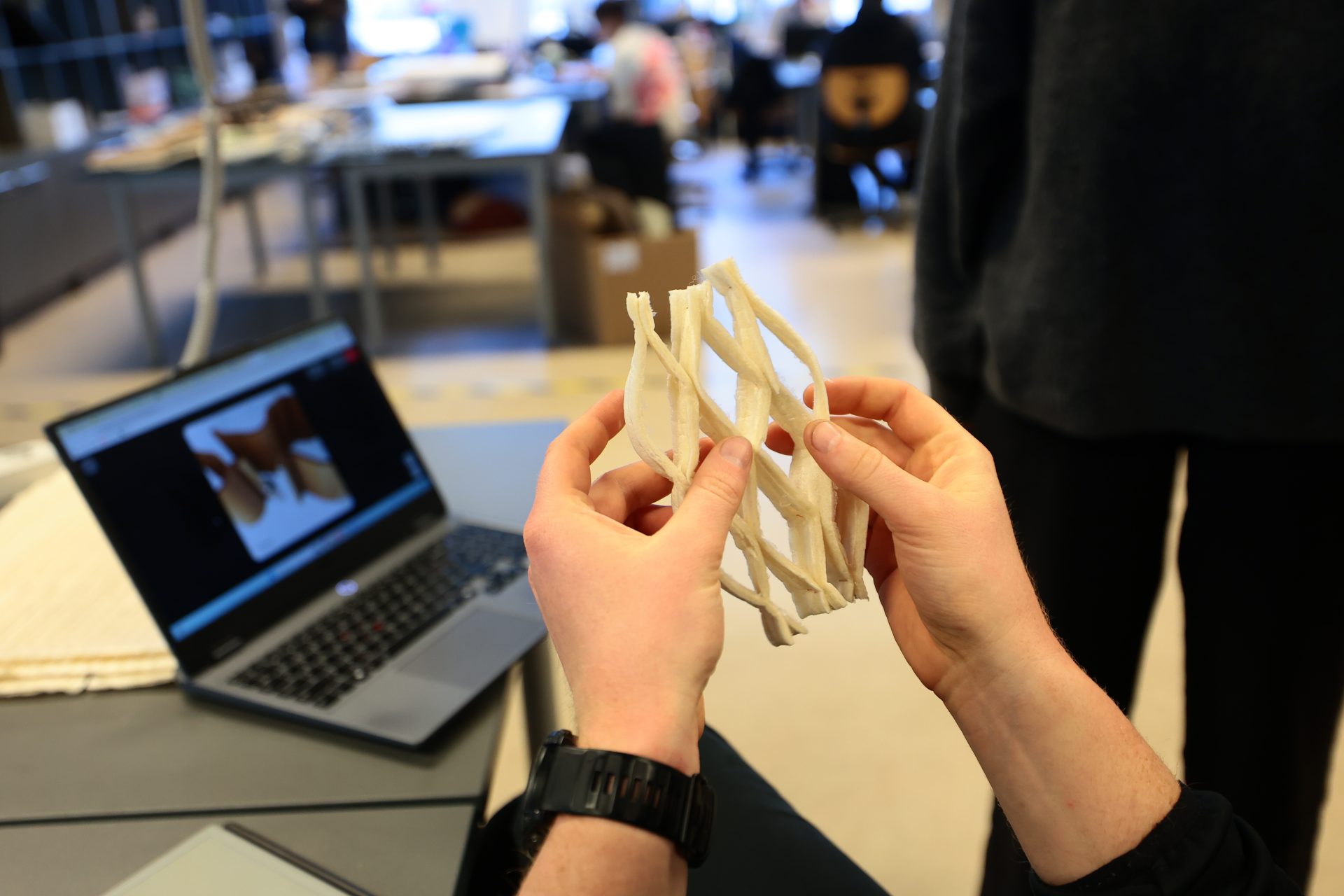
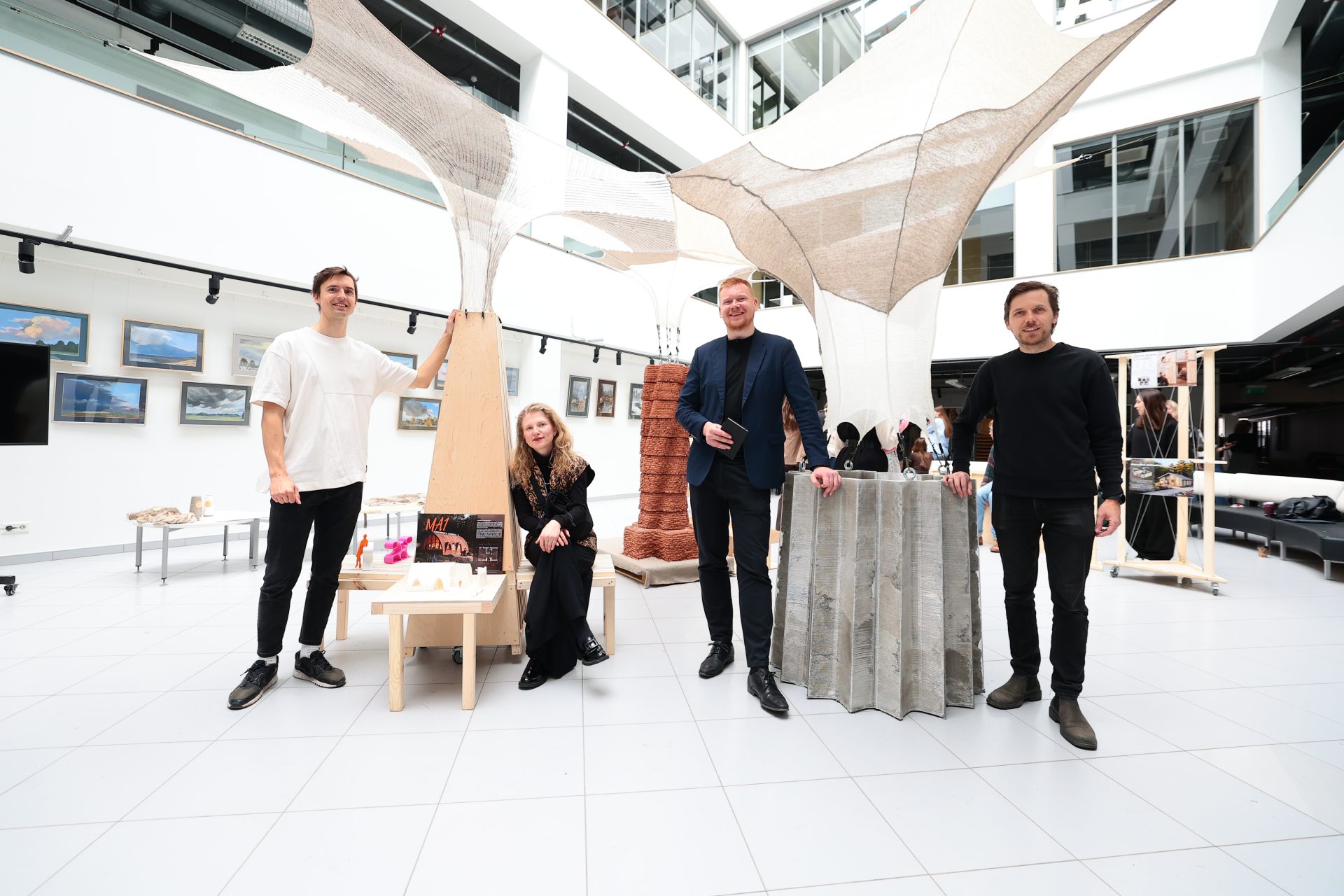
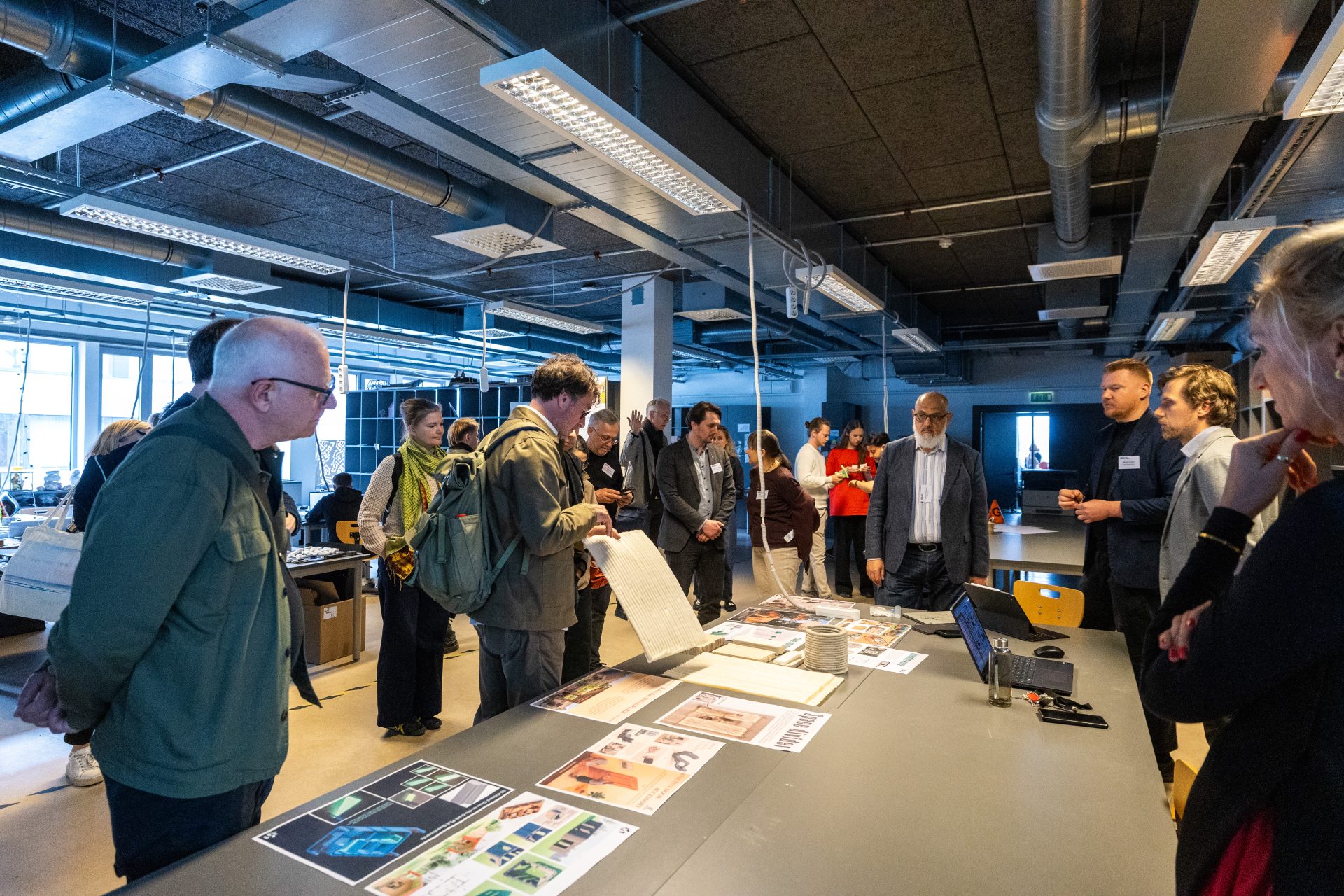
During the week, students worked in interdisciplinary teams, combining digital modelling, experimental design methods and hands-on material work. The workshop was organised around three tracks — textiles, timber structures and large-scale 3D printing — exploring how bio-based and low-impact materials can shape future architectural solutions.
Our 3D Concrete Printing Laboratory was invited to contribute to the large-scale 3D printing / concrete part. Together with the students, we explored how additive manufacturing can respond to practical architectural challenges — from living environments for seniors to adaptable furniture and free-form spatial elements.
The students were also asked to integrate next-generation 3D printable materials developed within the Archibiofoam Project, which explores biobased, recyclable and compostable biofoams with adaptive and load-bearing functions for architectural applications.
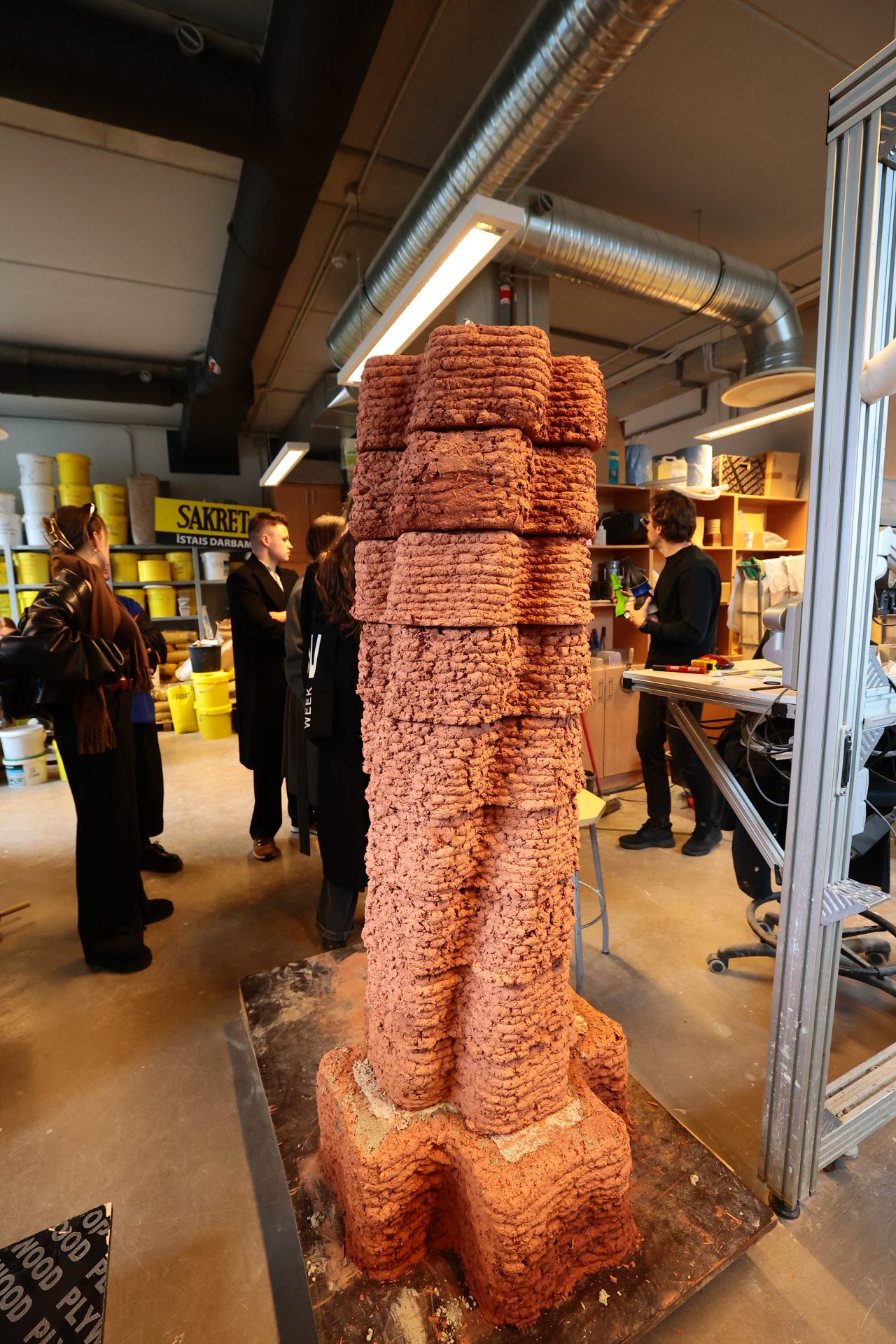
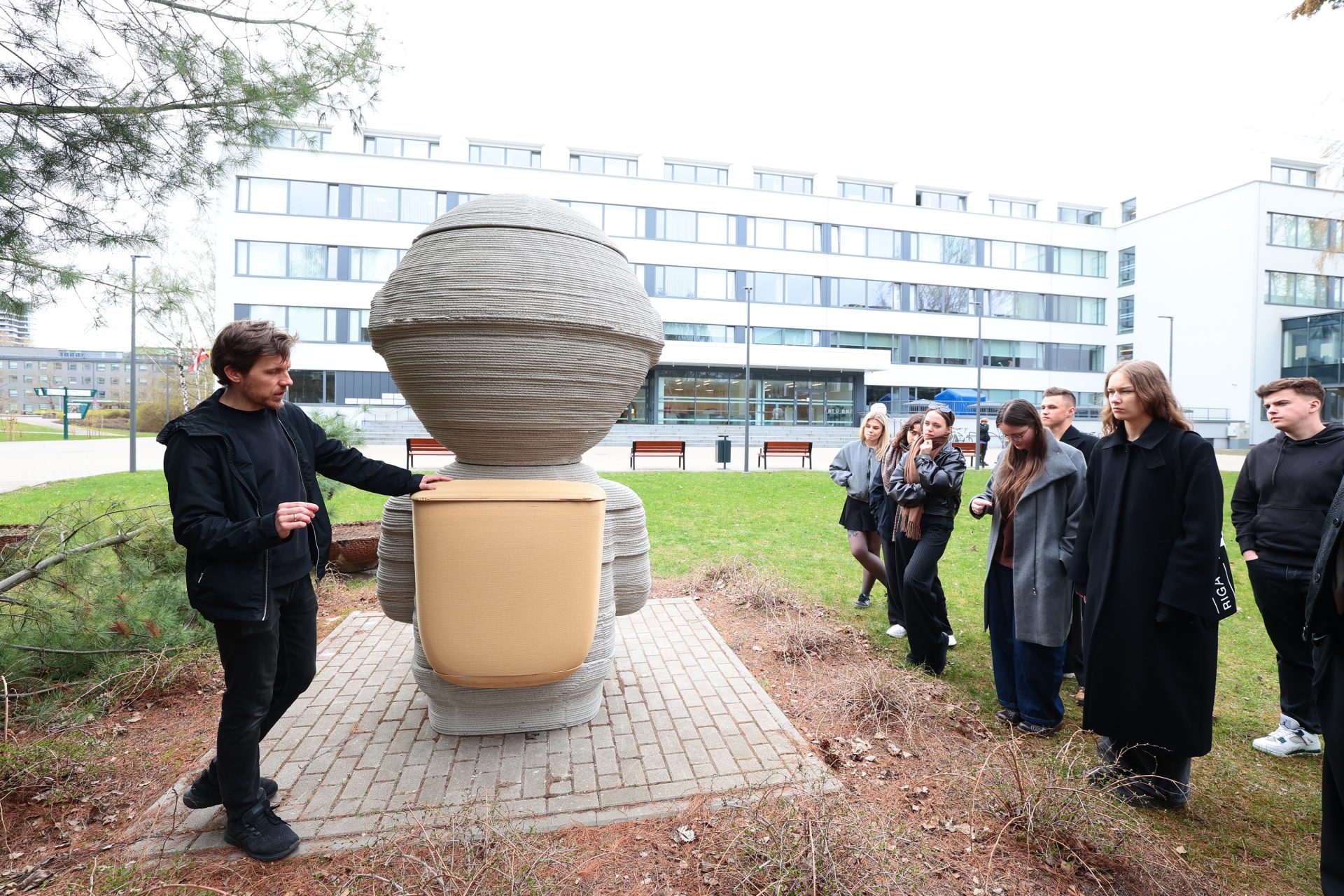
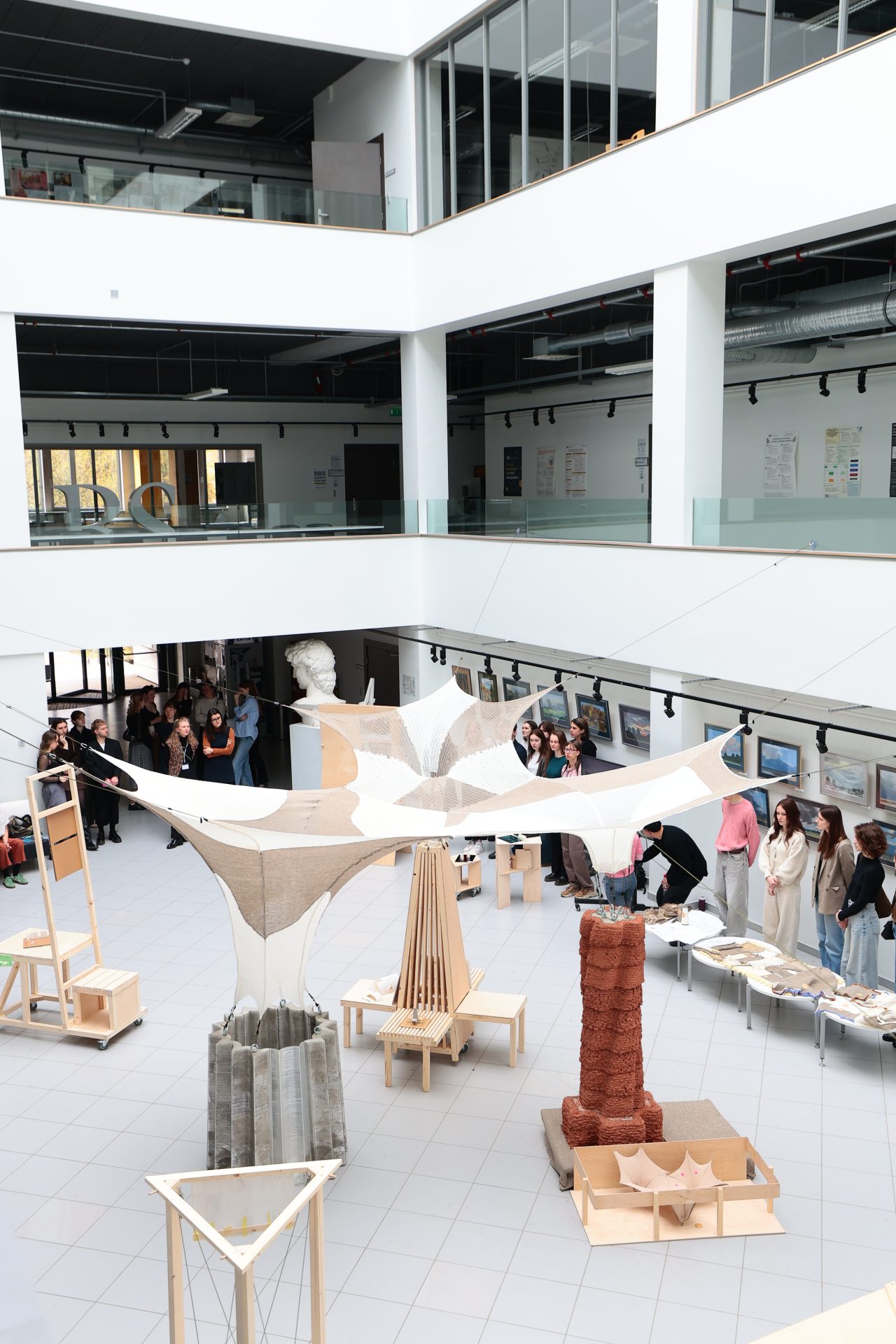
🧵🪵🧱 One of the outcomes was a spatial installation combining all three tracks: a textile membrane tensioned by timber and 3D printed elements. In our part, we produced 3D printed elements from unfired clay and hemp shives, which were used as free-form moulds integrated with cast concrete. In collaboration with Printstone Innovations SIA and DigiSplit LTD, we also developed a large-scale free-form 3D printed structure used as stay-in-place formwork for cast concrete.
It was also valuable to present the work to representatives of NBAA — the Nordic-Baltic Association of Architecture Schools — giving the students, RTU ADI and our laboratory the opportunity to share ideas, receive feedback and show what is currently being developed at the intersection of architecture, materials and digital fabrication.
🙏 Many thanks to Yuliya Šinke Baranovskaya from RAW project for initiating the workshop and leading the textile track, to Matijs Babris and Andra Marta Babre for the 3D concrete / printing track, and to Rudis Rubenis for leading the timber workshop. A special thanks also to our 3D Concrete Printing Laboratory students, and especially to Dāvis Dragons for realising the clay column within the LACHMAT project.
The material development and experimental work were supported by the #LACHMAT and TRANSITION projects, which helped make these prototypes possible.
📍 The final spatial objects will be on display at RTU ADI, Ķīpsalas iela 6, until the end of May.